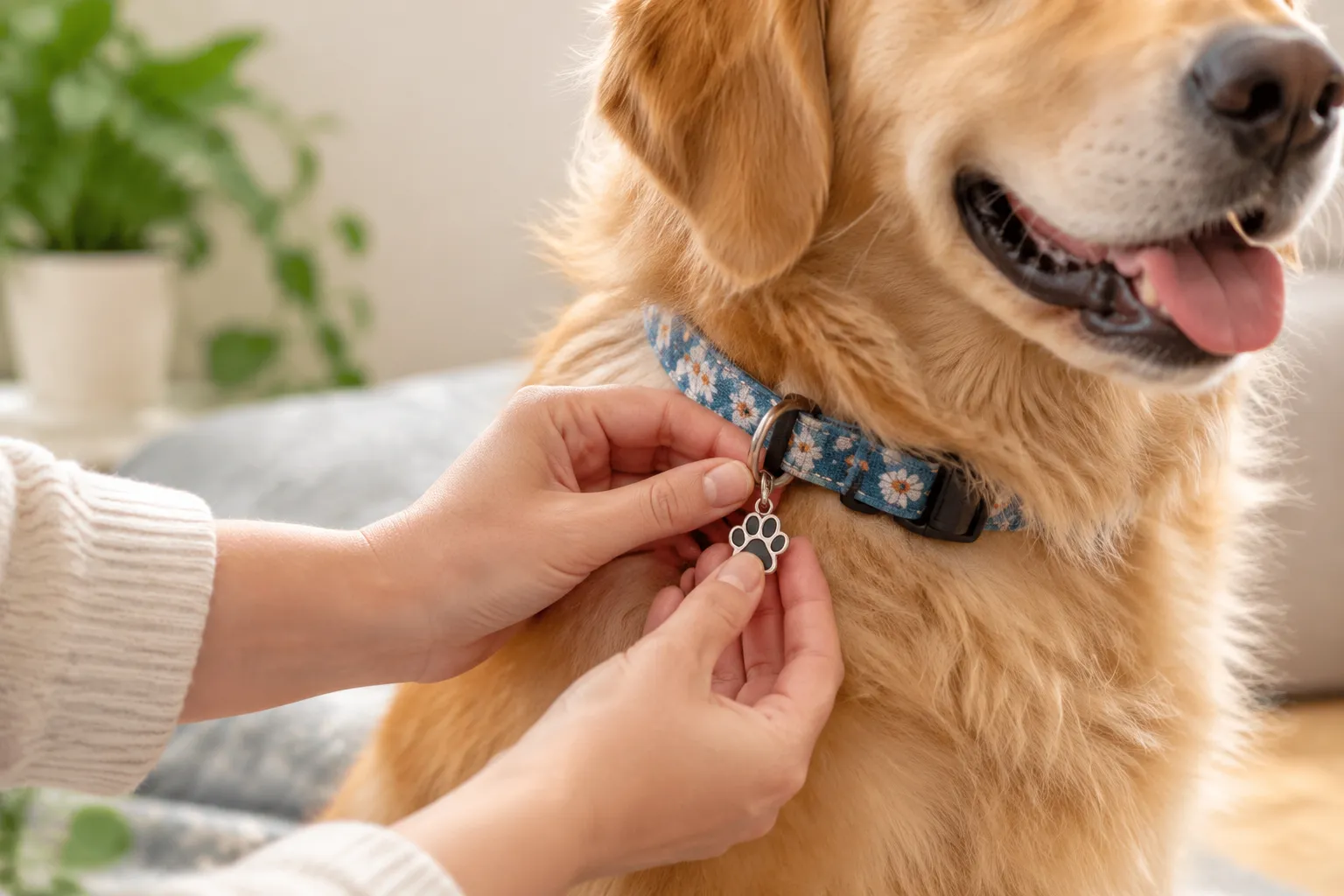
A leather collar with a brass buckle, a matching leash, a ceramic bowl, a bed with a removable cover, and a canvas tote to carry the whole set: bundled together, this assortment retails for somewhere between $180 and $400 at most premium pet brands. Strip away the branding and the packaging, and the same collection of materials and labor costs perhaps $60 to $90 to produce. The gap between those two numbers is the entire argument about premium pet accessories, and most of the marketing copy written about it works hard to avoid the arithmetic.
Pet accessories occupy an odd corner of retail. They borrow the language of human luxury goods (full-grain, hand-stitched, heirloom) while sitting on a shelf next to rawhide chews and litter boxes. That borrowing is not dishonest on its face. A well-made collar is a well-made collar. The question is what the buyer is actually paying for when the price climbs past a certain threshold, and whether the set delivers anything beyond a coherent color story.
What the Materials Actually Tell You
Begin with leather, since most premium sets lead with it. Full-grain leather, the top layer of the hide with the grain intact, runs a tannery a meaningful step above the corrected-grain and bonded leathers used in cheaper goods. It scuffs and darkens and holds shape. A collar cut from full-grain vegetable-tanned hide will outlast three dogs if the stitching holds. The tell is the edge: a premium collar's edges are burnished and sealed, often by hand, while a cheap one shows raw, fuzzy leather or a painted edge that cracks within months.
Hardware matters more than most buyers expect. Solid brass buckles cost several times what plated zinc alloy costs, and they age into a dull patina instead of flaking chrome. A set that pairs a $40 leather strap with a $2 stamped buckle has found the cheapest place to cut and taken it. The weight of the piece in the hand is a crude but reliable test: a collar that feels substantial usually is, and a leash that feels like a ribbon usually is that too.
Where the Price of a Set Goes
A five-piece set priced at $250 splits roughly into materials, labor, packaging, wholesale margin, and brand margin. The materials and labor portion, for genuinely good inputs, rarely exceeds a third of the retail price. Packaging in premium pet goods has grown absurd: rigid boxes, tissue, a card explaining the brand's founding story, sometimes a cotton dust bag for a dog leash. That packaging can add $15 to $30 to the cost of goods and does nothing for the animal wearing the collar.
The brand margin is the elastic part. A set from a small workshop that sells direct might carry a 2x markup over cost. A set from a venture-backed brand sold through boutique pet stores can carry 4x to 5x, because the retailer takes half and the brand still needs to fund its marketing. Neither markup is automatically unfair. The direct seller has fewer hands in the pot; the bigger brand has built a distribution machine. The buyer pays for that machine whether or not the machine improves the collar.
The Matching Problem in Bundled Sets
Sets sell because they resolve a decision. Buying a collar, leash, bowl, and bed separately means four decisions about color, material, and size, and the resulting mismatch is a small daily irritation. A coordinated set removes that friction, and that convenience has real value. It also means the buyer accepts whatever weak link the set contains.
In most premium sets, the weak link is the bed or the bowl. A brand that excels at leather goods often sources its ceramic bowls from a contract potter and its beds from a foam fabricator, and those items arrive with the brand's name but not its expertise. The collar in the set may be worth the whole price; the bowl may be a $12 import with a logo stamped on the bottom. A buyer who prices the set piece by piece, assigning realistic standalone values, usually finds that two items carry the quality and the rest are filler.
The Number a Fair Set Should Land Near
For a set built around a full-grain leather collar and leash with solid brass hardware, plus a stoneware bowl and a bed with a washable cover, a fair retail price sits between $150 and $220. Below $120, something is being faked: the leather is corrected grain, the hardware is plated, the bowl is thin earthenware, or the bed cover pills after two washes. Above $300, the buyer is paying for packaging, provenance, and a brand's advertising budget more than for the objects themselves.
That range holds for small and medium breeds. Large-breed sets cost more because the materials scale: more leather, more foam, a heavier buckle. A set for a forty-kilogram dog that lands at $240 is not overpriced; it is correctly priced for the material it consumes. The mistake is comparing a Great Dane's collar to a Chihuahua's and concluding the first brand is gouging.
What Handmade Actually Adds to the Bill
Small workshops charge more per unit because a person cuts, skives, punches, and stitches each strap rather than feeding leather through a machine. Hand-stitching with waxed thread, done with two needles and a pony, takes perhaps forty minutes for a collar and leash pair. At a living wage, that labor alone is $20 to $30. Machine stitching takes four minutes and holds nearly as well until it fails catastrophically at a single point rather than gradually. The premium for handmade is real and mostly justified, provided the maker is actually hand-stitching and not merely saying so.
The harder premium to justify is the one attached to design. A set in a fashionable colorway, refreshed each season, asks the buyer to pay for novelty that has no bearing on durability. A sage-green collar performs exactly like a tan one. When a brand releases seasonal sets at $300 and marks them down to $180 by February, the original price was a fiction, and the markdown reveals the honest number.
The Second-Hand Test for Pet Gear
One way to judge whether a premium set is worth its price is to look for it used. Full-grain leather collars and leashes show up in resale listings with years of wear and still function. They can be cleaned, conditioned, and handed to another dog. Cheap bonded-leather gear rarely survives to resale because it delaminates and cracks, and nobody lists a peeling leash. A set that holds resale value is a set that was built from materials worth keeping, and that fact is a better guide to quality than any tagline about craftsmanship.
Beds complicate this test. Foam compresses and covers stain, so a used bed sells for very little regardless of its original price. A premium bed justifies its cost through washability and foam density, not through resale. The buyer who wants the set to hold value should weight the leather goods heavily and treat the bed as a consumable.
A Practical Way to Price a Set Before Buying
Take the set apart on paper. Find the collar sold separately and note its price. Do the same for the leash, the bowl, and the bed. Add those four numbers. If the sum exceeds the set price by 15 percent or more, the bundle is a genuine discount and the buyer should take it. If the sum is within a few dollars of the set price, the set is convenience priced and the buyer should ask whether the coordinated look is worth the lack of choice. If the sum is lower than the set price, the set is a penalty for bundling, and the only reason to buy it is that the pieces match.
This exercise takes ten minutes and regularly saves $50 or more. It also exposes the sets where the brand has priced one item high to make the bundle look like a deal, a common trick in pet retail where the bed carries an inflated standalone price to flatter the set.
The Accessory That Quietly Costs the Most
The bed deserves its own scrutiny because it is the item most likely to be replaced and the one where premium pricing is least connected to durability. A $120 bed with a removable, washable cover and dense foam can last three or four years. A $40 bed with a sewn-in cover and loose fill flattens in six months, and the buyer replaces it twice before the expensive one would have worn out. Over five years, the cheap bed costs more, which is the oldest argument in the book and still true here.
But the expensive bed only wins if the cover actually comes off and the foam actually holds. Some premium beds charge for the look of the fabric and stuff the interior with the same loose fill as the cheap ones. The buyer who unzips the cover in the store and squeezes the foam learns more in ten seconds than the product page reveals in a thousand words.
When the Set Is Worth More Than Its Parts
There is a real case for paying a premium that the part-by-part math misses. A set from a small workshop that will repair a buckle or replace a strap at cost is worth more than the sum of its pieces, because the buyer is also purchasing a relationship with the maker. That service has a dollar value, and it shows up when the leash's clip fails after two years and the maker fixes it for the price of shipping rather than asking the buyer to buy a new leash.
This is where the premium set earns its price or loses it. A brand that stands behind a collar for years is charging for durability and service, and the $250 set is a fair trade. A brand that sells the same set with a seasonal color and no repair policy is charging for a photograph. The difference is not visible on the shelf, which is why the questions worth asking before buying are about the buckle's metal, the leather's grain, the cover's zipper, and the maker's willingness to fix what breaks.