A pet glam stocking filler list tends to collapse under its own ambition. The category sounds gloriously silly, and the market responds with glittering junk: a sequined bow that will not survive a single walk, a tiny bottle of pet-safe cologne that smells like a mall candle, a plush toy shaped like a champagne bottle that will be disemboweled by dinnertime. The list gets built anyway, because the premise is a good one. A stocking for the dog or cat has become a genuine ritual in a lot of households, and the small, cheap, silly objects inside it matter more than the price tag suggests.
Getting it right requires treating the stocking as a designed object, not a bin for leftovers. There is a rhythm to a good one: a chew, a wearable, something that makes noise, something that makes the animal's person laugh. The list below is organized around that rhythm, with attention to the practical question that kills most pet gift guides, which is whether the object survives a week.
The Glam Is the Problem and the Point
Pet glam lives in a narrow corridor between decoration and animal welfare. A rhinestone collar looks wonderful in a photograph and digs into the neck of a dog that spends its evenings pressed against the back of a sofa. A velvet harness photographs beautifully and picks up every burr in the meadow. This is not an argument against glam. It is an argument for glam that has been chosen with the animal's body in mind.
The stocking has an advantage over the wrapped gift, which is that the small stuff can be playful. A person will spend forty dollars on a serious harness without blinking and then hesitate over a six-dollar bow tie. The stocking absorbs the silly purchase. That is its function. The trick is keeping the silly purchase from being the kind that ends up in a bin by January.
Start With the Collar or Harness, Then Stop
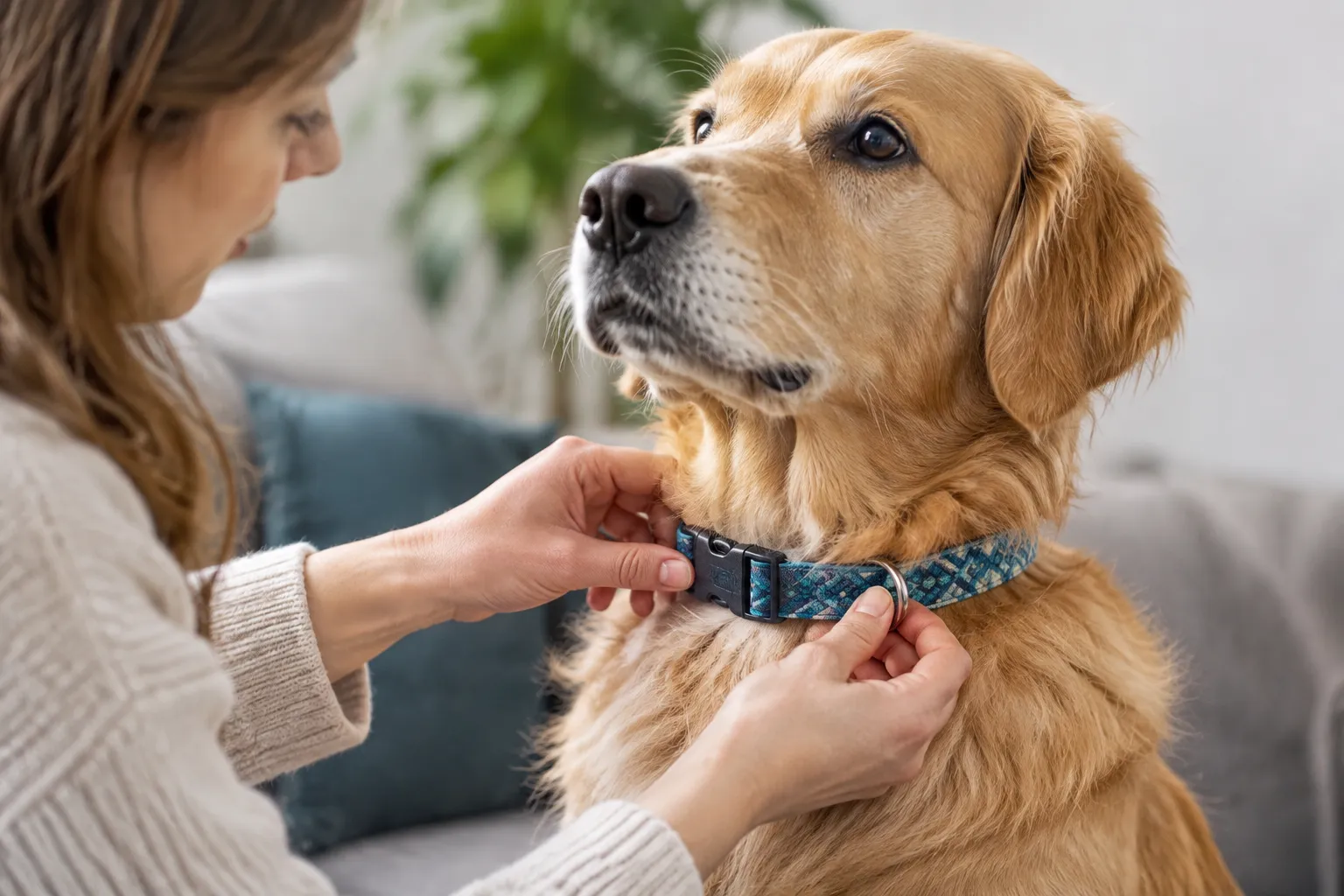
One wearable is enough. A second collar or a second harness turns the stocking into a duplicate drawer. Choose one piece and choose it for the animal's actual proportions. A greyhound neck and a pug neck share no geometry, and a collar sized for a pug will slide straight over a greyhound's ears.
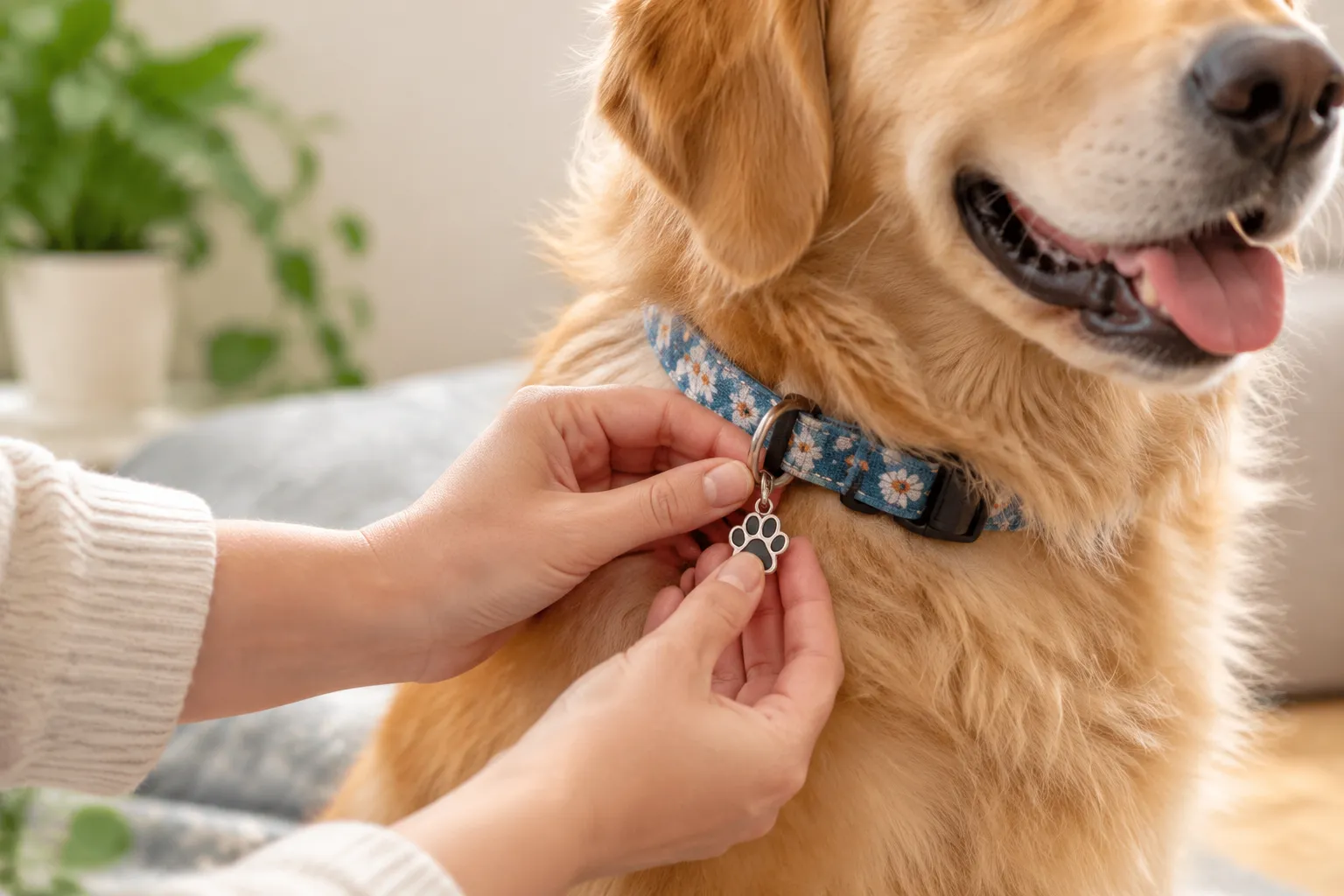
The glam argument for collars is usually about width. A narrow collar disappears on a large dog. A two-inch band with a good clasp reads as deliberate. Look for hardware that is stitched through leather or a heavy webbing, not riveted into a thin strap, because rivets pull through when a dog lunges at a squirrel. A small brass tag with the animal's name, ordered separately, costs less than most collars and makes the whole thing look considered.
For cats, a breakaway clasp is not optional. Cats climb, and a collar that does not release is a hanging risk. The glam version of a cat collar exists, usually as a slim band in a dark color with a tiny charm, and it tends to look better than the novelty print version anyway.
The Bow Tie Question
Bow ties are the single most photographed pet accessory and the single most returned. The reason is simple: most of them attach with an elastic loop that either strangles the collar or slides off it. A bow tie that clips to the collar's D-ring with a small carabiner will actually stay put. A bow tie with a velcro band will come off the moment the animal scratches.
A bow tie belongs in the stocking for the person, not the pet. It exists for the five minutes of photographs and then it comes off. That is a perfectly good use of six dollars. Buy one in a color that matches the collar, photograph it, and let it retire to the top of a wardrobe.
Chews That Match the Jaw
A stocking without a chew is a stocking without a center. The chew is the object the animal actually cares about, and it is the item that determines whether the stocking gets opened with any interest at all.
Match the chew to the jaw. A power chewer will destroy a standard compressed chew in under an hour. A small dog will choke on a chew sized for a retriever. The safest stocking addition is a chew that is slightly larger than the animal's mouth and dense enough that it does not splinter. Bully sticks are popular and expensive and smell appalling; a yak cheese chew lasts longer and is quieter in the house. Neither is a universal recommendation, because a dog with a sensitive stomach will react to one and not the other.
For cats, the chew category is thin. Silvervine sticks are the closest equivalent and are cheap enough to buy in a bundle. A cat that ignores them is a cat that does not care, and no amount of glam will change that.
The Toy That Survives the Week
Stuffed toys are where pet stockings go to die. A plush duck with a squeaker lasts about eleven minutes in a household with a determined terrier, and the stuffing ends up across the living room floor. This is not a reason to skip toys. It is a reason to buy the kind that fails safely.
Look for toys with no plastic squeaker, or with the squeaker sewn into a separate compartment. Look for flat toys without loose filling. A rope toy is unglamorous and nearly indestructible and should probably be in every stocking. A puzzle toy that dispenses treats is the most glamorous option in the category, because it looks like a design object on the floor and occupies the animal for twenty minutes.
Cat toys are a different problem. Cats reject toys with a specificity that borders on contempt. A wand toy with feathers gets ignored; a wand toy with a strip of leather gets destroyed. Buying three cheap toys and accepting that one will be a hit is a better strategy than buying one expensive toy and hoping.
Grooming Items That Earn Their Place
A grooming item in a stocking can feel like a hint, which is why it needs to be the pleasurable kind. A rubber curry brush that the animal leans into is a good stocking item. A nail clipper is not, unless it comes with a promise to use it.
The best glam grooming item is a good brush with a wooden handle. It costs more than the plastic version and lasts a decade. A tin of paw balm is a small, useful object that fits the stocking format perfectly, especially in winter, when pavement salt cracks pads. A small bottle of pet shampoo in a scent that is not "oatmeal" is a small luxury, though the person doing the bathing may resent it.
Skip the cologne. Most pet colognes are alcohol-based and smell like a department store. The animal does not want it, and the person will use it once.
The Treats Section Is Where Restraint Pays
Treats are the easiest thing to overbuy. A stocking stuffed with six types of treat is a stocking that produces a stomach upset by the afternoon. One bag of a high-quality treat, in a size appropriate for training, is enough. A second bag of a single-ingredient treat, like dried fish or freeze-dried liver, is a reasonable addition.
The glam move here is packaging. A small cellophane bag tied with a ribbon looks better than the original pouch and costs almost nothing. A handwritten tag with the animal's name on it completes the effect. The treat inside matters less than the presentation, which is the one place in pet gifting where that is true.
The Human-Facing Object
Every good pet stocking has one object that is not really for the animal. A framed photograph of the pet, a small enamel pin, a mug with a portrait on it. These are the items that make the stocking a gift rather than a supply run, and they are also the items that get kept.
Custom portrait items have become cheap and fast. A painted portrait of a dog in a military uniform, printed on a canvas six inches square, costs about the same as a decent chew and produces a much better reaction. The same portrait on a keychain or a tote bag is a reliable second item. This is the category where the glam impulse should be allowed to run completely unchecked, because the failure mode is a funny object rather than an unsafe one.
Sizing the Stocking Itself
The stocking has to hold the objects. A standard Christmas stocking is about eighteen inches long and will swallow a chew, a collar, a bag of treats, and a small toy with room to spare. A miniature stocking is decorative and holds almost nothing, which frustrates the animal and the person.
Buy the stocking in a fabric that can be wiped down. Felt picks up fur, and glitter sheds across the floor for months. A quilted cotton stocking in a solid color with the animal's name embroidered on the cuff is the version that gets reused. The embroidery usually costs more than the stocking itself and is worth it, because a named stocking becomes a permanent object in the household rather than a disposable one.
The Budget Line That Actually Holds
A good pet stocking runs between thirty and sixty dollars in total, which is roughly the cost of one serious chew and one nice collar. The distribution matters more than the total. Spend on the chew and the collar, because those are the objects that get used daily. Save on the bow tie, the treats, and the toys, because those are the objects that get used once.
The temptation is to buy twelve cheap objects and create the illusion of abundance. The result is a stocking that photographs well and produces a pile of things to throw away on December 27. Six objects, chosen well, produce a better morning.
A stocking with a chew that lasts three weeks, a collar that gets worn until it wears out, and a portrait that hangs in a hallway for a decade is a stocking that worked. The bow tie, photographed once and retired to the top of a wardrobe, did its job too. The measure of the list is not how much glamour it contains. It is whether the animal's person remembers the morning fondly and the animal is still chewing on something in February.