The quick of a dog's nail contains a blood supply and a nerve, and it sits closer to the tip on some dogs than others. That single anatomical fact explains most of the drama. A trim that seems routine on a black lab with thick, dark quills can turn into a yelp and a blood spot on the kitchen floor on a terrier whose nails are thin and translucent. The stakes are small in the grand scheme, but they feel enormous in the moment, and the feeling is what makes the job harder the next time.
Most nail-trimming advice fails because it treats stress as a discipline problem. It is closer to a geometry problem. The person is holding a tool at an awkward angle, the dog is balanced on three legs, the light is bad, and nobody can see where the quick ends. Fix the geometry and a surprising amount of the stress evaporates on its own.
Why the Stress Spiral Starts Before the Clippers Come Out
The spiral usually begins in the days before a trim. A dog hears the drawer open, or sees the towel come out, and starts backing toward the hallway. The person notices the retreat, feels a flicker of dread, and the whole event is now charged before a single nail has been touched. Dogs read that shift in posture and breathing with uncomfortable accuracy.
By the time the clippers are in hand, both parties are braced. The dog pulls a paw back. The person grips harder. The dog pulls harder. A nail gets clipped at a bad angle, or the quick gets nicked, and the yelp confirms every fear in the room. The next session starts further up the spiral.
Breaking the pattern means breaking it early, at the point where it is cheap to break. That is the drawer, the towel, the first reach for a paw in a calm moment on a Tuesday when nothing is happening.
Handling a Paw Without a Fight
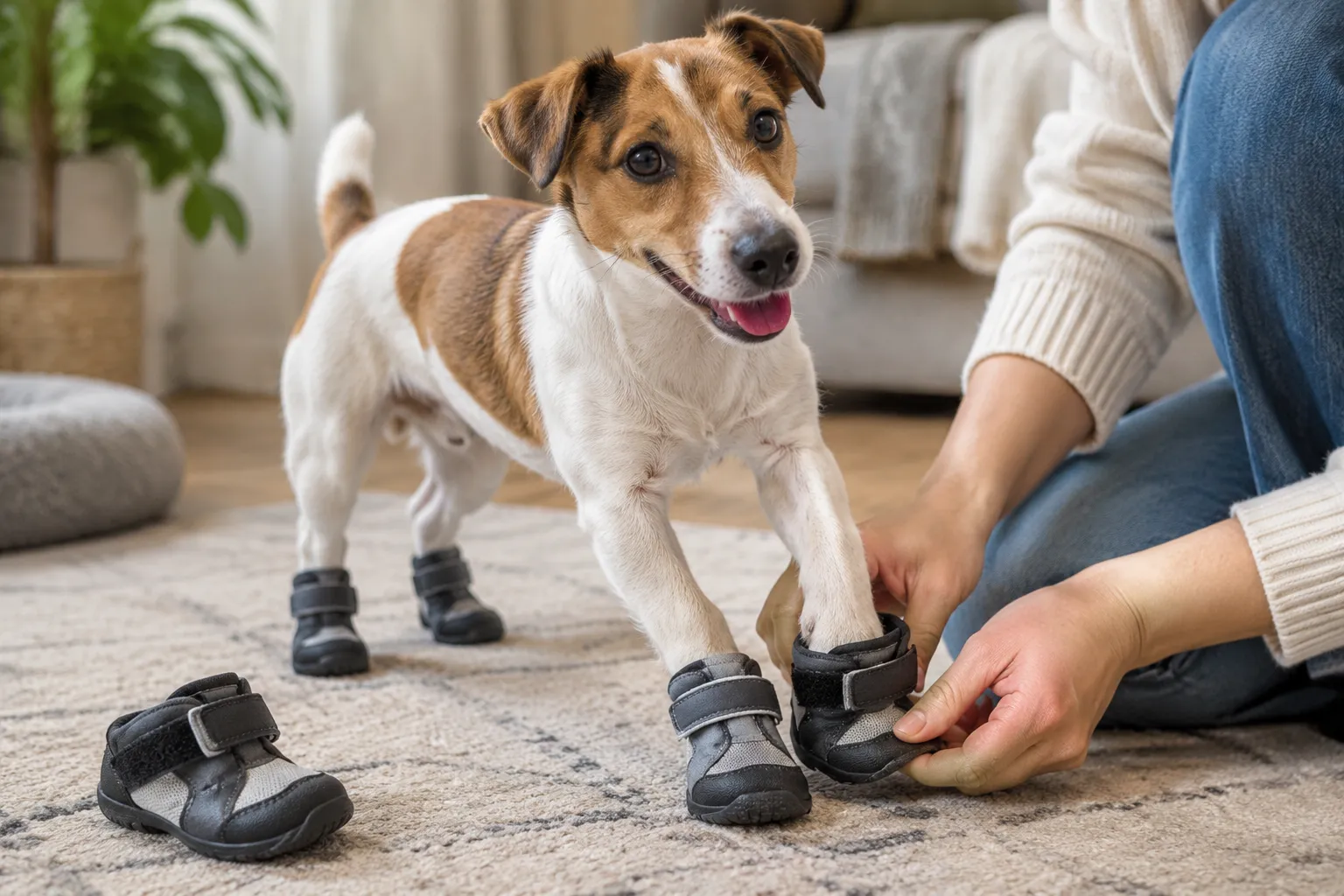
Desensitization gets dismissed as a training term, but the practical version is dull and effective. A person spends a week or two picking up a paw for two seconds during ordinary petting, then setting it down before the dog thinks to pull away. No clippers in sight. The paw becomes a boring object that gets touched and released.
The release matters as much as the touch. A dog learns that holding still gets the paw handed back, and that lesson compounds. By the time the clippers appear, the paw has already been handled dozens of times without incident.
There is a real limit to this. Some dogs have paws that are genuinely sensitive, whether from injury, age, or a nail that has grown into the pad. A dog that snaps when a specific toe is touched is communicating something worth checking, and a vet visit before the next trim is the sensible move.
The Right Tool for the Nail in Front of You
Scissor-style clippers, guillotine clippers, and rotary grinders all work. The choice depends less on brand loyalty than on the dog. Scissor clippers give a clean cut and suit thick nails that need real leverage. Guillotine styles are older and fussier to load, and they crush more than they cut on dense nails. Grinders sand the nail down in small increments and remove the guesswork about where the quick sits, at the cost of noise and a longer session.
A grinder is the better first tool for a nervous owner with a dog that tolerates sound, because it lets a person stop the moment the nail looks close to the quick. A clipper demands a confident cut. Hesitation with a clipper produces a jagged edge and a dog that feels the pause.
Whatever the tool, sharpness is non-negotiable. A dull clipper crushes the nail and sends a small shock up the toe, and a dog remembers that. Replacing a cheap pair every year beats nursing a dull pair for five.
Finding the Quick on Dark and Light Nails
On a clear nail, the quick shows as a pink core inside a translucent shell, and the cut line sits a couple of millimeters past it. On a black nail, that window is closed. The workable method is to take small slices off the tip and look at the cut surface after each one. The center of the nail shifts from a chalky gray to a darker, slightly damp dot as the quick approaches. That dot is the stop sign.
A person who takes one big cut has no second chance. A person who takes four small cuts has three chances to notice the shift. The tradeoff is time, and time is cheap compared to a bleeding nail and a spooked dog.
Good light helps more than most gear. A bright lamp angled low across the nail reveals the quick's shadow on dark nails in a way overhead light does not. A headlamp is unglamorous and genuinely useful.
What to Do When a Nail Bleeds
It happens. A quick gets nicked, a bead of blood appears, and the room goes quiet. The instinct to panic is strong and unhelpful. Styptic powder pressed against the tip with light pressure usually stops a minor bleed in a minute or two. Cornstarch works in a pinch. A dog that is bleeding heavily or not stopping after several minutes needs a vet, not more powder.
The critical move is what happens next. A person who abandons the session entirely teaches the dog that bleeding ends the event, which is fine, but the dog also learns that the clippers are dangerous. A better move is to stop, apply pressure, offer a treat, and end on a calm note rather than a frantic one. The dog's memory of the event is the last thirty seconds, not the nick itself.
The Two-Person Method and When to Use It
Some dogs do better with a second set of hands. One person holds the dog steady against their body, not in a headlock, and the other trims. The holder's job is to keep the dog from sliding off the table, not to restrain it into stillness. A dog that feels pinned fights harder.
The method works well for large dogs on a raised surface and for dogs that are merely wiggly rather than frightened. It works badly for dogs that are genuinely afraid, because a second person adds pressure without adding comfort. For those dogs, a single calm person and a slower pace beat a second handler every time.
A Groomer's Table Is Not a Failure
There is a stubborn idea that a dog owner should be able to do every basic task at home. That idea costs a lot of dogs a lot of stress. A groomer trims nails all day, has a table at the right height, has a restraint system the dog has seen before, and can do in three minutes what takes a nervous owner twenty. The dog often handles it better because the setting is unfamiliar and the routine is someone else's.
Handing the job to a professional is a reasonable choice, not a defeat. The home version can still exist for maintenance between visits, with a single nail or two trimmed on a calm evening to keep the habit alive. The goal is short, unremarkable nails and a dog that does not dread the sight of a drawer opening.
How Often Nails Actually Need Attention
Nails grow at different rates depending on the dog, the surface it walks on, and the season. A dog that pounds pavement daily may need a trim every six to eight weeks. A dog that lives on carpet and grass may need one every three to four. The sound is a decent guide: clicking on a hard floor means the nails have grown past the pad and are ready for a trim.
Waiting until the nails curl or splay the toes is waiting too long. Long nails change how a dog stands, and over time that shifts weight onto the wrong parts of the foot. The fix is frequent small trims rather than rare big ones, which also keeps the quick from growing out with the nail.
A dog that has gone months without a trim will have a long quick, and the first few sessions will only be able to take a sliver off each nail. The quick recedes over weeks as the nail shortens. Patience here is not virtue, it is mechanics.
The Quiet Version of a Good Trim
The best nail trim looks like nothing much. A dog stands on a rug in good light, one paw lifted and released, a couple of small clicks, a treat, a second paw. No wrestling, no drama, no blood. The whole thing takes four minutes and the dog walks away unbothered.
Getting there is mostly a matter of shrinking each step until it is small enough that the dog does not resist, then repeating it until it is boring. That is slower than a single heroic session and it works far more often. The spiral breaks at the smallest possible point, and it stays broken because nothing in the routine gives the dog a reason to restart it.