A dog in a cable-knit sweater, a matching leash, a bandana, and a little bow on the collar can look like a walking display shelf. The same dog wearing two of those things, chosen with care, can look like the best-dressed animal on the block. The difference is not the number of accessories. It is the hierarchy between them.
Layering pet accessories without clutter comes down to a simple discipline: one item leads, the others support it, and nothing competes for the same visual job. Most cluttered pet looks fail because three pieces are all trying to be the star. A neon harness, a patterned bandana, and a charm-covered collar each shout at the same volume, and the eye has nowhere to rest.
The fix is structural, and it applies whether the animal is a 4 kg terrier or a 40 kg shepherd. Pick the lead element first, then ask of every other piece whether it makes the lead element read more clearly or muddies it.
The lead element decides everything else
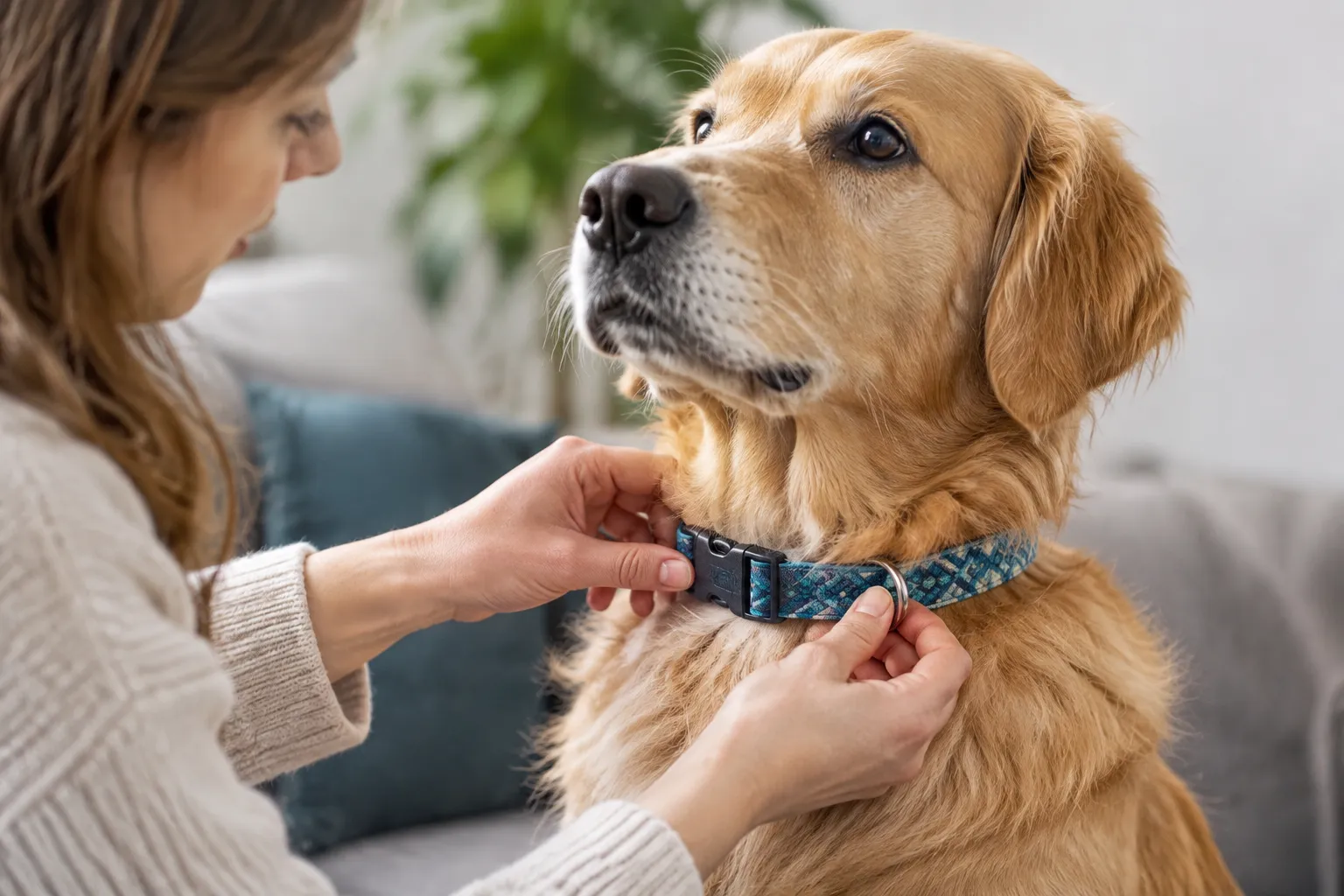
Every layered pet outfit needs one anchor. On a daily walk, that anchor is usually the harness or collar, because it sits at the center of the body and carries the most visual weight. A harness in a deep olive canvas, a collar in tan leather, a leash in a single warm color: each can serve as the anchor.
Once the anchor is chosen, the rest of the outfit has a rule to follow. A patterned bandana works with a solid harness. It fights a patterned harness. A brass tag looks deliberate on a leather collar and looks lost on a busy printed nylon one. The anchor sets the register, formal or casual, muted or bright, and everything else has to live inside that register.
The common mistake is choosing accessories in isolation, one at a time, because each piece looks good on its own. A person buys a lovely floral bandana in spring, then a striped harness in summer, then a charm collar in autumn, and by winter the dog is wearing all three at once.
Two patterns maximum, and they should differ in scale
Pattern mixing works on pets for the same reason it works on people: contrast in scale keeps the eye moving without chaos. A small gingham bandana next to a wide-stripe harness reads as intentional. A small gingham next to a small polka dot reads as an accident.
A practical rule: if two patterned pieces appear together, one pattern should be large and bold, the other small and quiet. If a third piece enters, it should be solid. Three patterns on one animal is a costume, and costumes have their place, but the everyday walk is not it.
Pattern also has a hidden cost in photographs. A busy bandana and a busy harness blur together at phone-camera distance, and the detail that looked charming in the hand disappears into noise. Solid pieces hold their shape in pictures. Patterned pieces need space around them.
Keep metal hardware to one finish
Hardware is the quietest layer and the one most people ignore. A silver buckle on the collar, gold rings on the harness, a rose-gold tag, and black coated clips on the leash create a low-grade visual buzz that is hard to name but easy to feel. The outfit looks slightly off without anyone being able to say why.
Choosing a single finish across all metal parts, brass with brass, silver with silver, matte black with matte black, settles the whole look. It also makes future purchases easier, because a new tag or clip either matches the finish or it does not.
There is a practical side here too. Mixed finishes tend to mean mixed quality, and a cheap plated ring next to a solid brass buckle will tarnish at a different rate. Matching hardware often means matching durability.
Color palettes that survive the mud
Pet accessories live outdoors, which changes what colors are worth layering. Pale cream and white look beautiful in a product photo and show every speck of trail dust within a week. Deep colors, rust, forest, navy, chocolate, charcoal, hide dirt far better and layer more forgivingly with each other.
A tight palette of two or three colors is the most reliable route to a layered look that reads as designed. Rust harness, tan leash, cream bandana. Navy collar, gray leash, brass tag. The palette does the work that a hundred small decisions would otherwise require.
Bright colors are not banned, but they should be spent carefully. One saturated piece against two neutrals is a strong look. Three saturated pieces is a carnival.
The bandana is the most overused layer
The bandana deserves its own section because it is the piece most often added without thought. It sits at the throat, right under the face, and it draws the eye immediately. That is a lot of power for a square of fabric.
A bandana works best when it is the only patterned element in the outfit, or when it is a solid color picking up a secondary tone from the harness. It should also be sized to the animal. A large bandana on a small dog swallows the chest and makes the whole front end look heavy. A small bandana on a large dog looks like a napkin.
Folding matters as much as fabric. A bandana rolled into a narrow strip and tied close to the neck reads tidy. A wide triangle left to drape over the shoulders reads sloppy and catches on everything. The roll takes ten seconds and changes the entire silhouette.
Charms and tags are punctuation, not sentences
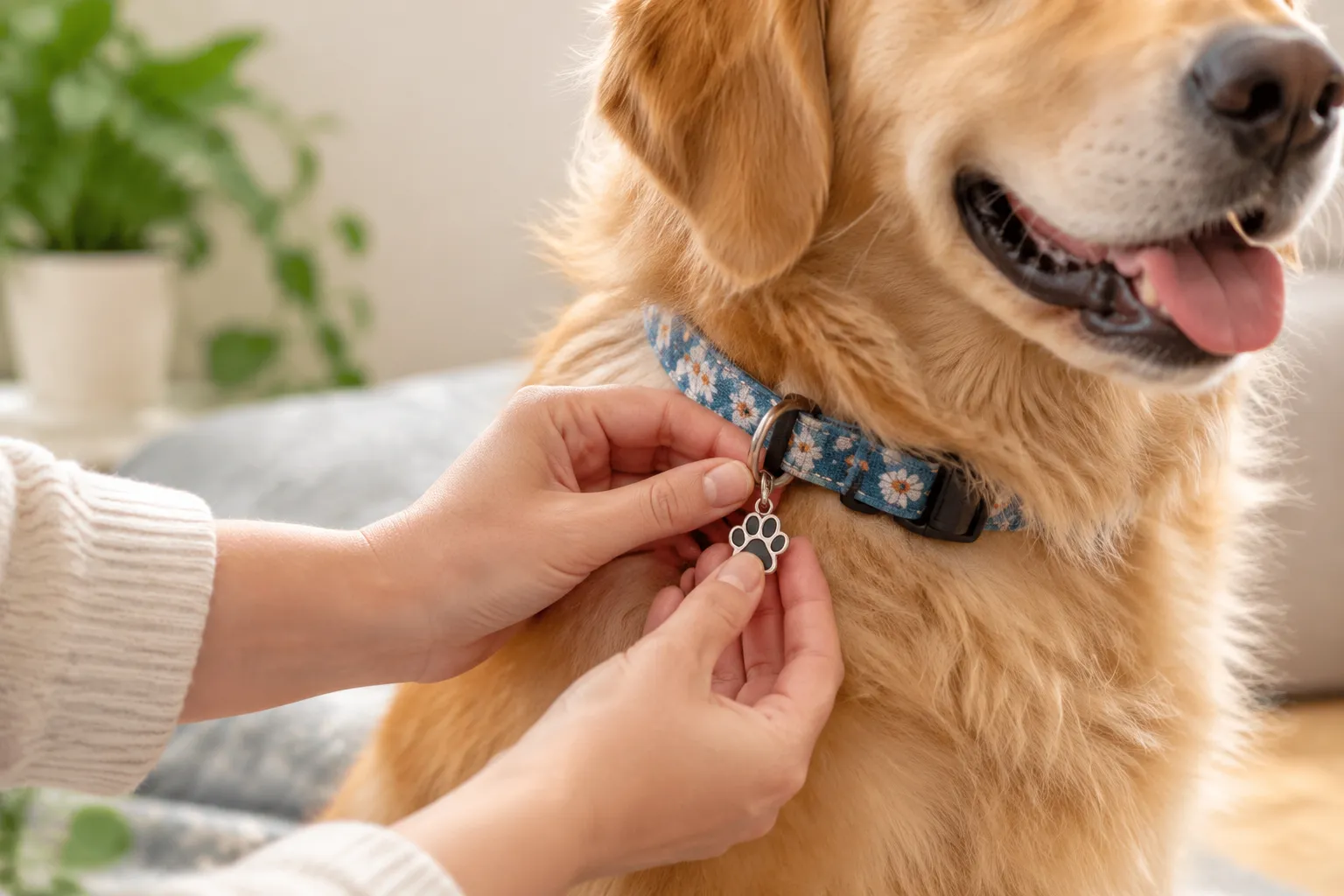
A single well-chosen tag, a small brass bone or a round enamel disc, adds a point of interest at the collar. Two tags start to jingle and tangle. Four tags look like a keychain and sound like one on a quiet street at night.
The ID tag is non-negotiable and should be the anchor of the metal layer. Beyond that, one decorative charm is plenty. If the ID tag itself is attractive, a plain engraved brass or stainless disc, it can carry the whole job and no extra charm is needed.
Seasonal layers need a base to sit on
Cold weather tempts people to pile on. A sweater, a coat, a scarf, and a bandana on one animal is not layering, it is stacking, and it usually ends with the dog overheating on the first sunny block and the owner carrying a coat home.
The workable approach is to treat the coat or sweater as the base layer and keep everything else minimal. A solid knit sweater, a plain collar, and one leash. The coat is the outfit. Save the bandana for the milder days when it can be the lead element on its own.
Fit matters more than color in cold weather. A coat that bunching at the shoulders or rides up at the rear will look wrong no matter how well the palette is chosen. The layered look collapses when the base layer does not fit.
One piece that moves is worth more than three that sit still
Movement is an underrated part of a layered look. A bandana that flutters, a leash that swings, a tag that catches the light: these give the outfit life on the move, which is when a dog is actually seen. Static accessories stacked on top of each other just add weight.
This is why a single loose bandana often outperforms a harness, a collar, a tag, and a bow combined. It moves. It draws the eye. It does one job well.
The layered look that reads as cluttered is almost always the one where every piece is static and none of them is doing the moving, catching light, or leading the eye. Layering works when each piece has a role and the roles do not overlap.
A test before leaving the house
Stand at the door and look at the animal for five seconds. If the eye lands on one thing first, the layering is working. If the eye bounces around without settling, remove one piece and check again. The removed piece is almost always the one that was competing with the anchor.
This test is faster than any rule and it catches the cases the rules miss, the matching set that is one piece too much, the tag that clashes with the buckle, the bandana that is the wrong size. Five seconds at the door saves a whole walk of looking slightly off.
Pet accessories are a small corner of dressing, but the principles are the same as any other: hierarchy, restraint, and a willingness to take one thing off. The animals do not care. The people watching do, and a dog in a single well-chosen bandana will always look better than the same dog buried under four.