Pet pajamas arrive in the mail folded flat, looking exactly like baby clothes with the sleeves cut short and the legs tapered into a strange four-way split. The fabric is often soft. The sizing is often a fiction. Somewhere between the online photo of a serene golden retriever in buffalo plaid and the moment a real dog tries to walk across a kitchen floor in the same garment, the whole enterprise either works or falls apart.
Fitting a pet for pajamas is a measurement problem disguised as a fashion problem. The garment has to cover a body that bends in places human clothing never addresses: a deep chest that slopes down toward narrow hips, elbows that turn outward, a back leg that folds nearly flat against the belly when the animal sits. A pajama set built for a human toddler will fit none of that, and most of the sets sold as pet pajamas are exactly that, resized toddler clothes with a tail hole punched through the seat.
That does not make the whole category worthless. A decent pair of pet pajamas does real work: it keeps a thin-coated dog warm through a cold night, stops a nervous licker from worrying at a healing incision, and cuts down on fur left on the couch. The point is to find the pair that does that work without turning the animal into a shuffling, miserable bundle of fabric.
The Three Measurements That Decide Everything
Every pet pajama listing shows a size chart, and most of those charts are wrong in the same way: they measure the pet like a human. A human fit runs on chest, waist, and inseam. A pet fit runs on three different numbers, and they do not map onto the human ones.
The first is back length, measured from the base of the neck to the base of the tail. This is the number that determines whether the pajama back rides up between the shoulder blades or bunches into a fold over the hips. It is also the number most owners get wrong, because they measure from the collar instead of the neck, adding two or three inches of phantom length and ordering a size too big.
The second is chest girth, the full circumference around the widest part of the rib cage, just behind the front legs. This number matters more than any other for comfort. A pajama that pinches the chest restricts breathing and turns every step into a small negotiation. A chest measurement that is one size small will produce a garment that technically goes on and then never stops pulling.
The third is neck circumference at the collar line, where the pajama opening will actually sit. This is the number that catches people trying to size a dog by weight. Two dogs at the same forty pounds can have necks two sizes apart, one thick and one slender, and the pajama that fits one will slide off the other.
Weight, which most charts lead with, is nearly useless on its own. A dense, muscular dog and a long, lean one can share a number on the scale and share nothing else. Weight is a starting guess. The tape measure settles it.
Measure a Standing Pet, Not a Sleeping One
The measurement itself has a technique to it. A pet measured lying down will read short. A pet measured while squirming will read short in some places and long in others. The animal should be standing square on all fours, head up, on a flat surface, ideally after a walk when the body has settled into its normal shape rather than the tucked posture of a nap.
Use a soft cloth tape, the kind a tailor uses, because a rigid tape measure will not follow the curve of the chest and will overstate the girth by a finger's width or more. Snug the tape until it sits flat against the coat without pressing into it. For a fluffy dog, measure the body, not the fur. Part the coat down to the skin at the chest and run the tape there. A husky's winter coat can add two inches to a girth reading, and a pajama built to that number will hang loose against the actual body underneath.
Write the three numbers down before opening any shopping tab. The measurements do not care which brand is having a sale. They are the only fixed point in a category where a size small from one maker fits like a medium from another.
Why the Same Size Fits Differently Across Breeds
Breed shape matters as much as breed size. A dachshund and a Jack Russell terrier can share a chest girth and need completely different pajamas, because the dachshund's back length is half again as long and the drop from chest to belly is deeper. A pug and a French bulldog both have broad chests and short backs, and both will swim in a pajama cut for a dog with a longer torso.
Sighthounds, the greyhounds and whippets, are the hardest fit of all. Their chests are deep, their waists are tiny, and the slope from one to the other is steep. A standard pajama cut for a barrel-chested dog will hang off a greyhound's waist like a curtain, and the back legs will slip out of their openings on the first stair climb.
Flat-faced breeds raise a separate problem. A pajama with a high, snug collar can ride up under the chin of a pug or a Boston terrier and press against the throat, which is uncomfortable at best. For these dogs, look for a lower neckline or a cut that leaves the throat clear.
The practical move is to read the size chart against the three measurements, then read the breed notes if the maker provides them, then read the reviews for the specific breed. A review that says "runs small on my greyhound" is worth more than any chart.
The Fabric Question Comes After the Fit Question
Fabric is where most buyers start, and it is the wrong place to start. A pajama in the softest brushed cotton on the market is a waste if the chest is too tight. But once the measurements are settled, fabric becomes the deciding factor for whether the garment gets worn or gets shoved in a drawer.
For a dog that wears pajamas indoors overnight, a light cotton or a cotton-blend jersey works well. It breathes, it does not trap heat against the skin, and it moves with the body. For a thin-coated breed in a cold house, a fleece or a brushed knit adds warmth without much weight. For a dog that will wear the pajamas outdoors on a winter walk, a water-resistant shell over a fleece lining makes sense, though at that point the garment is closer to a coat than a pajama.
Two fabrics to approach with caution. The first is anything stiff or scratchy at the seams, because a dog's skin is thinner than a human's and a rough seam under the front leg will chafe within an hour. The second is anything with heavy embellishment, buttons, beads, or dangling trim, which a determined chewer can work loose and swallow.
The Tail Opening, the Belly Strap, and Other Fit Details
The tail opening is a small feature that decides a lot. It needs to sit at the actual base of the tail, not an inch above or below, or the fabric will pull against the tail with every wag and the pajama will work itself sideways. A reinforced, slightly elasticized opening holds its shape better than a raw hemmed hole.
The belly strap, the piece that runs under the abdomen and connects the front and back of the garment, should sit behind the front legs and in front of the hind legs, resting flat against the belly. A strap that rides too far forward catches the elbow. One that rides too far back catches the knee. Either way, the dog will walk with a hitch in its gait that says plainly the strap is in the wrong place.
Leg openings deserve a look too. They should be wide enough that the leg passes through without rubbing at the armpit or the thigh, and the fabric around them should have some give. A pajama with tight, non-stretch leg holes will produce a raw patch under the front leg within a day of wear.
A Fit Test in the First Five Minutes
Once the pajamas are on, the animal will answer the fit question faster than any chart. Put the garment on, then watch for five minutes without intervening. A well-fitting pajama disappears into the dog's movement. The dog walks, sits, lies down, gets up, scratches an ear, and the fabric follows.
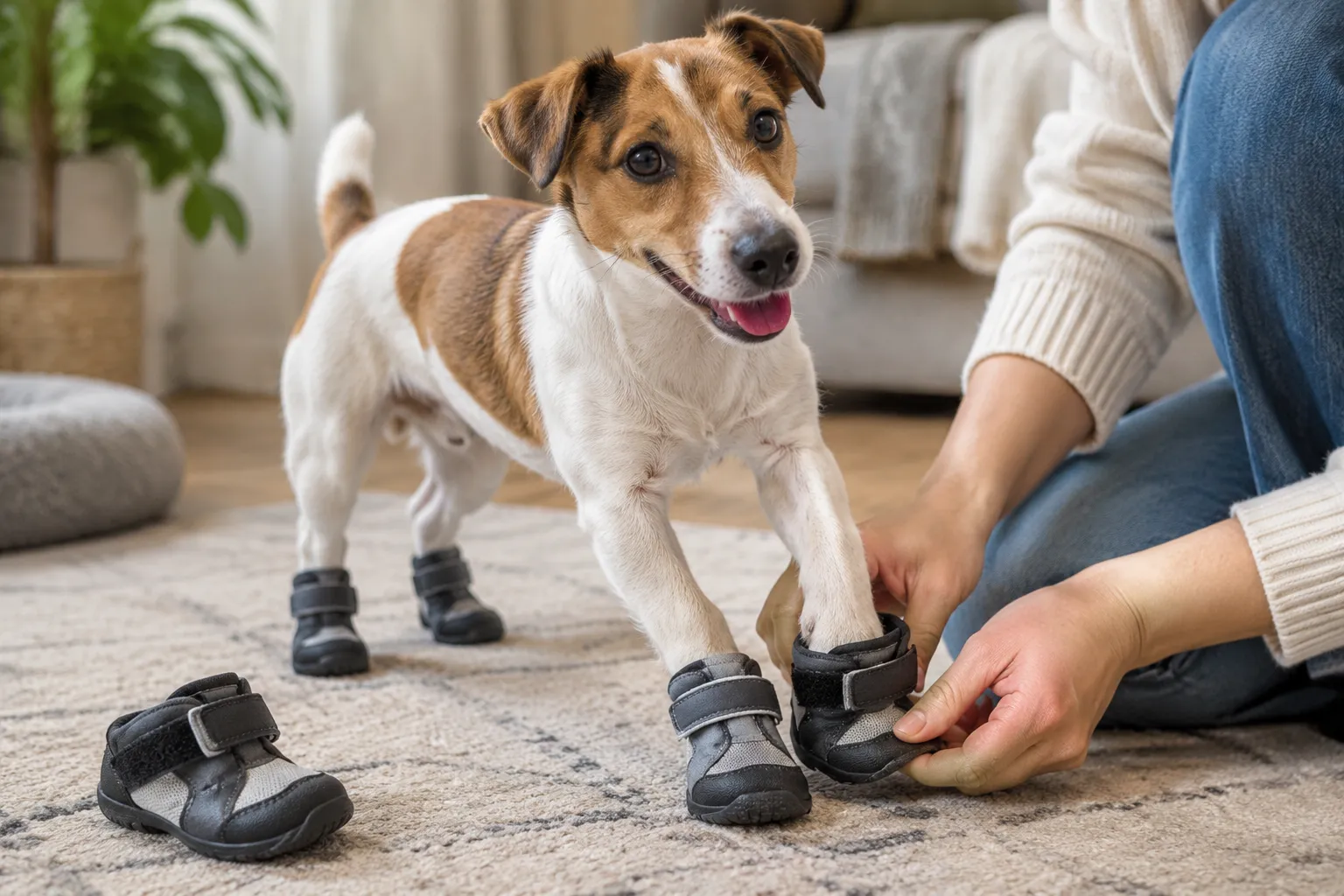
A poorly fitting one announces itself. The dog walks with short, choppy steps or bunny-hops with the back legs together, which usually means the hind leg openings are too tight or the back is too short and pulling. The dog freezes in place, which usually means the chest is too snug. The dog tries to bite or paw at the garment, which means something is rubbing, pinching, or sitting in a place the dog cannot ignore.
Check three spots by hand after the dog has moved around: under each front leg, where the fabric meets the armpit; the belly strap, which should lie flat without digging; and the neckline, which should allow two fingers to slide underneath without strain. Red marks or flattened fur at any of those points mean the size is wrong, even if the tape measure said otherwise.
When the Pajamas Should Come Off
Even a well-fitting pair has a limit. Pajamas are for supervised wear or overnight sleep, not for a dog left alone for hours in a house with nothing to do. A bored dog will chew at a sleeve, and a swallowed scrap of knit fabric is a veterinary problem that costs far more than the pajamas did.
Take the garment off for walks, for meals, and for any outdoor time that involves mud, burrs, or a fence line. Check the seams and the tail opening every few wears for loose thread or a stretched hem. And if the dog's weight shifts by more than a pound or two, measure again. A pajama that fit in October can pinch by January, and the animal will not say so. It will just stop moving the way it used to, and that is the only size chart that ever really matters.