A dog harness in burnt orange, photographed on a cream linen sofa, sells out in four hours. The same harness arrives three weeks later in a plastic mailer, and the color is closer to safety cone than terracotta, and the webbing has the stiffness of a cheap belt. The buyer is out thirty-eight dollars and a Saturday return trip. This is the ordinary arc of trendy pet gear bought online, and it repeats thousands of times a day, because the category has learned how to photograph well and almost nothing else.
Pet accessories have become a fashion business wearing a functional costume. The marketing borrows the language of outdoor equipment and the visual grammar of home decor, and the product underneath is often an unbranded item from the same factory that supplies a dozen other storefronts. Six mistakes account for most of the disappointment. None of them are about being fooled by a single bad listing. They are about the assumptions shoppers carry into the whole category.
Mistake one: treating the product photo as a specification
Studio photography flatters pet gear more than almost any other consumer category, because the item is small, the model is adorable, and the lighting is controlled. A collar photographed flat on marble hides the fact that the buckle sits at an awkward angle on a narrow neck. A raincoat shot on a standing dachshund conceals the way the chest panel rides up when the dog actually walks.
The useful habit is to hunt for the customer photo, not the hero image. Search the reviews for images taken on a kitchen floor or in a hallway, ideally with bad light. Those pictures show the true color, the true bulk, and the true way the thing hangs on a real animal. A listing with forty reviews and no user photos is a listing with forty claims and no evidence.
Sizing charts belong in the same skeptical bucket. A chart that lists chest girth in centimeters but never says where on the chest to measure is decoration. Two people measuring the same dog can land three inches apart depending on whether the tape sits behind the front legs or across them. The number on the chart is only as good as the instruction behind it, and most instructions are one line long.
Mistake two: buying the aesthetic before the anatomy
The current wave of pet fashion favors structured shapes: boxy jackets, wide-brimmed hats, chunky knit sweaters, leather-look harnesses with brass hardware. These read beautifully in a photo and behave badly on a body that was not designed around them. A French bulldog in a boxy jacket looks editorial until the shoulders bind and the dog refuses to move off the doormat.
Anatomy decides more than taste does. Flat-faced breeds overheat quickly and do poorly in anything that covers the throat. Sighthounds have deep chests and narrow waists, so a standard harness either slips or chafes. Double-coated breeds trap heat under a sweater, and the compression can mat the undercoat in a way that takes a groomer an hour to fix.
The practical move is to buy the shape the dog's body actually needs and then find the least ugly version of it. That order matters. Trendy gear is designed for a photographed silhouette, and a real animal will always interrupt the silhouette at some point.
Mistake three: ignoring the return policy until after the box arrives
Pet gear is unusually hard to return. Once a harness has been on a dog outdoors, many sellers will not take it back, and the language in the policy is often buried two clicks deep. A shopper who assumes the standard thirty-day window applies will discover, at the counter, that the item was final sale or that the shipping cost to send it back exceeds the refund.
The cheap check is to read the return page before reading the product page. Look for the words final sale, and look for whether return shipping is on the buyer. A fifteen-dollar harness with a twelve-dollar return label is a twenty-seven-dollar mistake, and the math is worth doing before the click, not after.
Mistake four: trusting the word durable on a listing
Durable is the most abused adjective in the category. It appears on a two-dollar nylon collar and on a forty-dollar climbing-grade harness with the same confidence. The word carries no standard, and sellers know it. What carries information is the material and the construction detail: the width of the webbing, the type of buckle, whether the stitching runs in a box-X pattern or a single straight line.
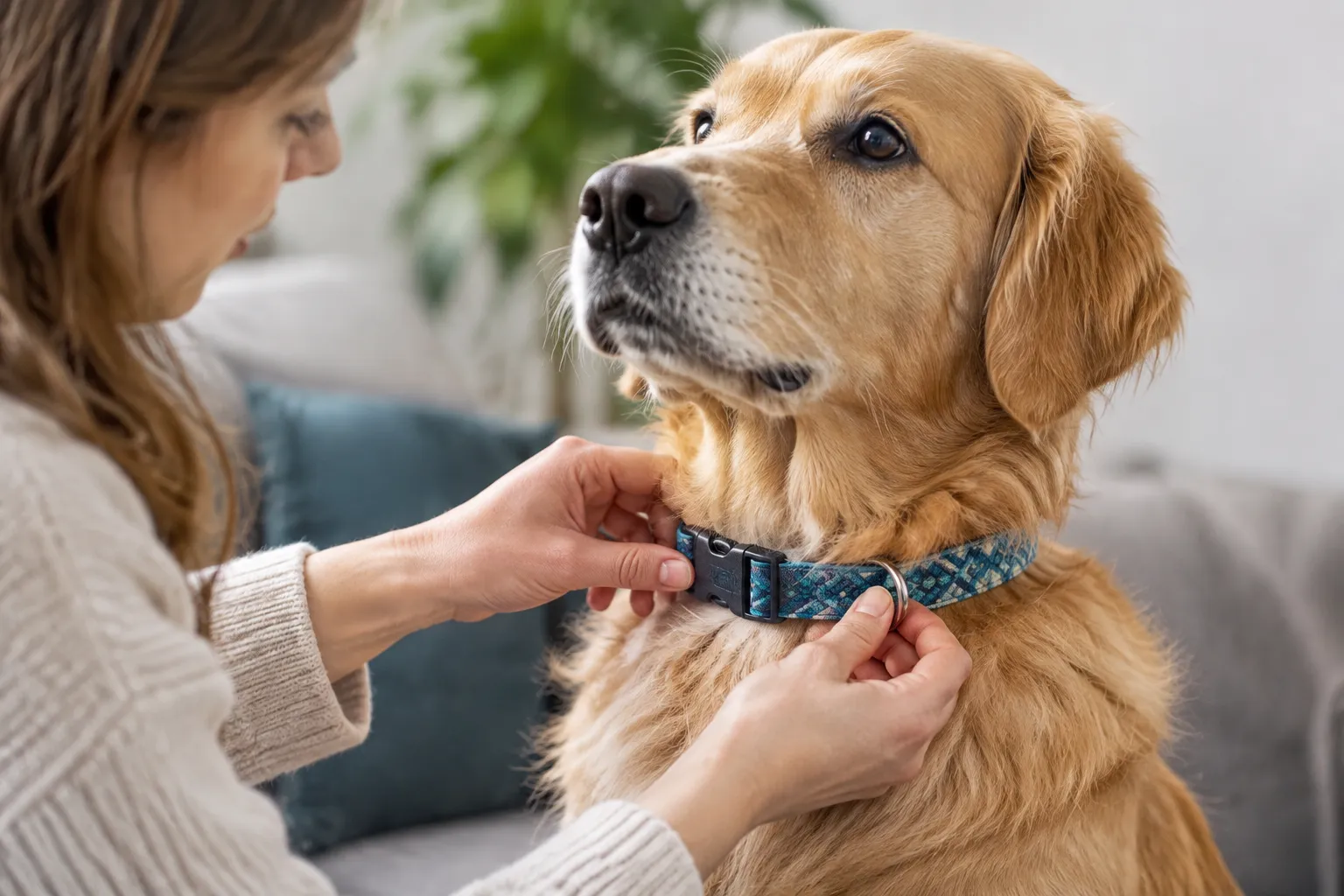
Hardware is where cheap gear fails first. Plastic side-release buckles crack in cold weather and pop open under a hard pull. Thin stamped metal bends at the D-ring. A shopper who learns to look at the buckle in the photo, and to read whether the listing even names the material, will filter out most of the disposable tier without leaving the couch.
The other tell is weight. Listings that give a weight for the product are usually made by sellers who know their item is substantial. Listings that omit it are often hiding how flimsy it is. That is a heuristic, not a rule, but it holds more often than the word durable does.
Mistake five: chasing a trend that expires before the item ships
Trendy pet gear moves on a fashion calendar now. A color or silhouette peaks on social media, sells out, gets restocked, and is tired within a season. The shopper who orders during the peak often receives the item after the peak, when the look has already been replaced by something else and the item feels dated on arrival.
The deeper cost is not the money. It is the drawer. A household that buys each wave ends up with four harnesses in four dead colors and one that actually fits the dog. The trend cycle rewards novelty, and a pet's body rewards consistency. Those two clocks run at different speeds, and the shopper who notices this stops buying the wave and starts buying the one item that works.
There is a fair exception for things that are cheap, reversible, and worn for a photo. A bandana, a bow tie, a seasonal collar cover: these can follow the trend because they cost little and ask nothing of the animal. The mistake is applying the same logic to the load-bearing gear.
Mistake six: skipping the safety check because the item is cute
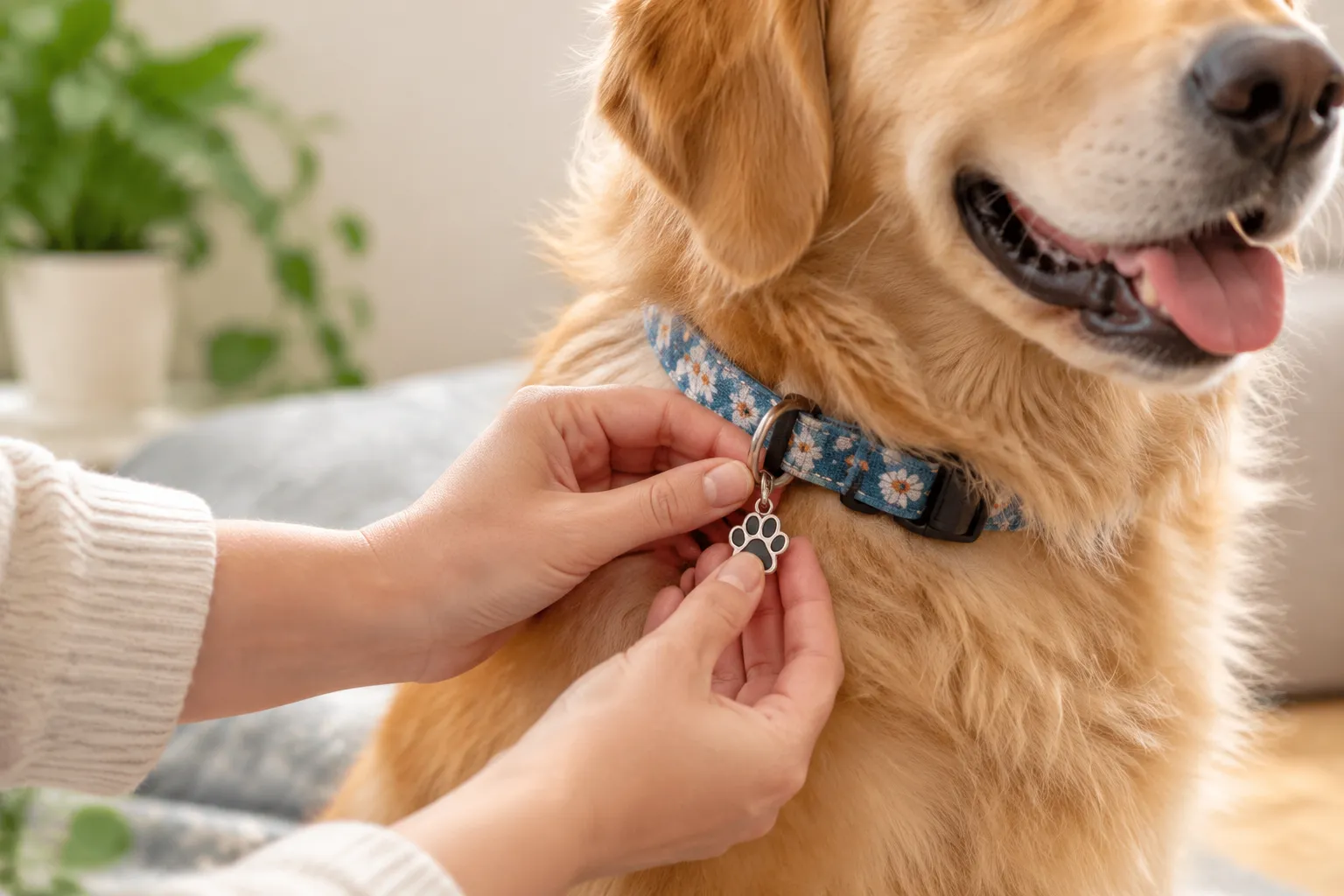
Cuteness suppresses scrutiny. A tiny bell on a collar, a decorative charm, a dangling tag: each is a small object near a mouth that investigates everything. Loose hardware on a harness can be chewed off. A long strap on a coat can catch on a fence or a car door. These are ordinary hazards, and they are easy to overlook when the item is photographed on a sleeping puppy.
Fit is the other safety issue. A harness that is too loose lets a determined dog back out of it near a road. One that is too tight rubs the armpit raw over a long walk. The check takes a minute: two fingers should slide under the strap at the chest, the dog should be able to move the shoulders freely, and nothing should press on the throat. Gear that fails this check is not a bargain at any price.
None of this requires becoming a gear obsessive. It requires slowing down at the exact moment the listing is doing its best work: the hero photo, the word durable, the sold-out badge, the trend. The pet will wear the thing for years or refuse to wear it once, and that outcome is usually decided before checkout, by a shopper who read the return policy and looked at the buckle.