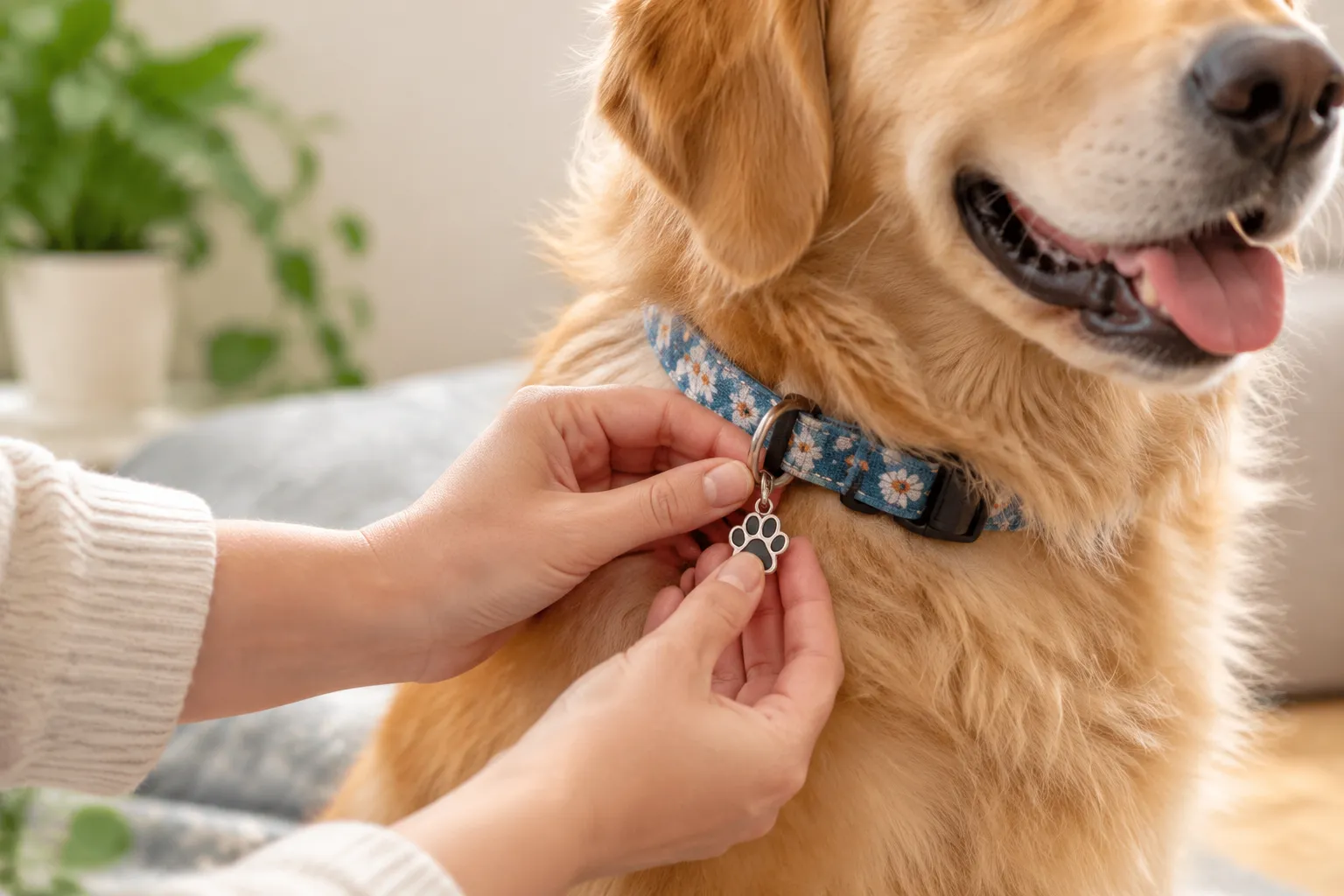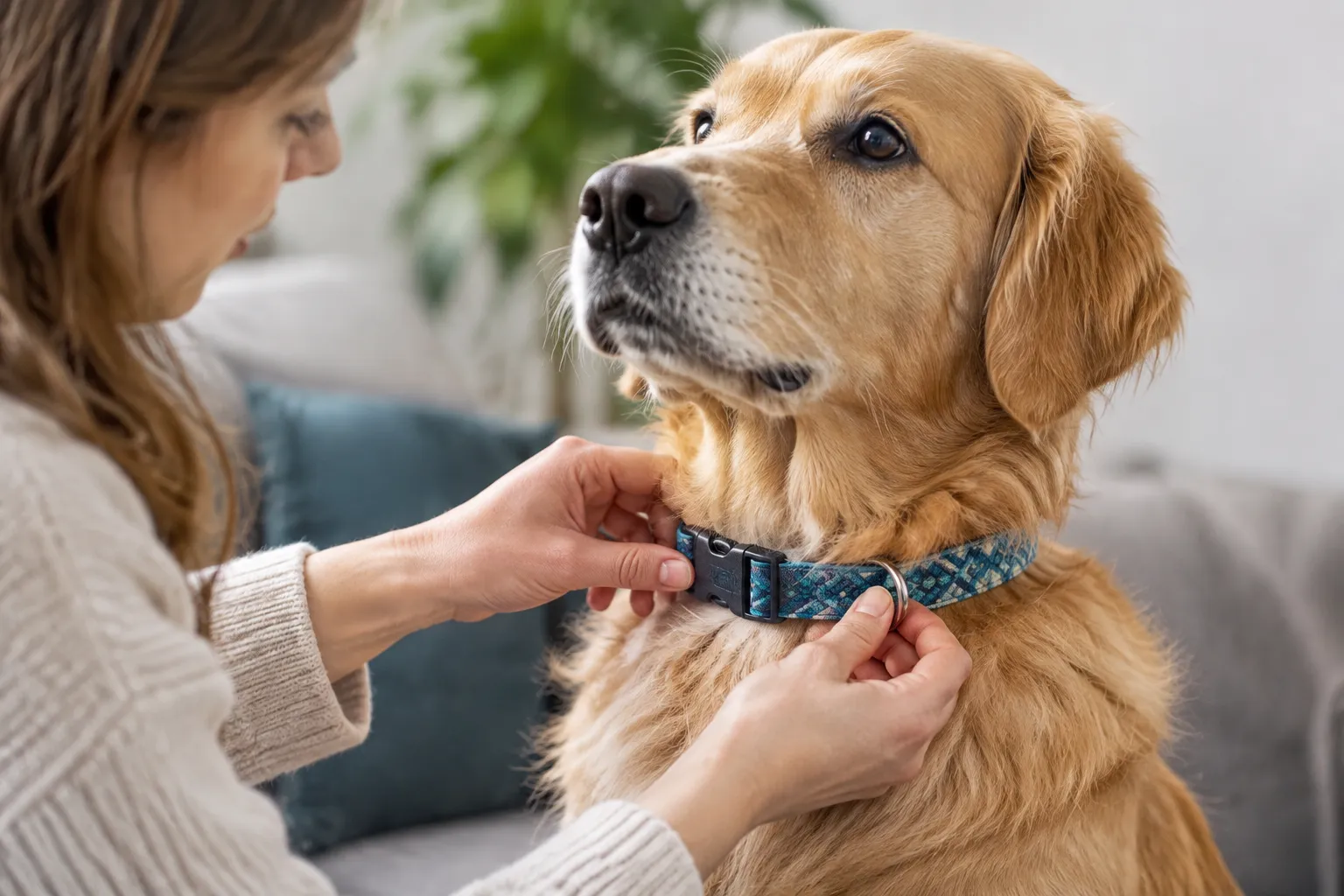
Walk through the pet aisle of any large pet store and a pattern emerges fast: whole shelves of items that cost real money and look, within a week, like they were fished out of a discount bin. The leash that matched the collar that matched the harness, all in a shade of teal the manufacturer calls "ocean mist." The bed shaped like a hamburger. The bandana printed with a slogan in Comic Sans. None of these things are cheap, exactly, and none of them are broken. They just make the animal wearing them look, somehow, less dignified than the animal actually is.
That gap between what pet owners spend and what the result looks like is worth examining, because the causes are specific and repeatable. Five mistakes account for most of it. Each one is easy to make, easy to fix, and almost never discussed in those cheerful lists of "must-have pet products."
Matching Every Single Item to Every Other Item
The matching set is the great trap of pet accessories. A printed collar, a printed leash, a printed harness, a printed waste bag holder, a printed bandana, all cut from the same fabric. Retailers love this because it simplifies shopping into a single decision. Owners love it because it feels coordinated, and coordination feels like taste.
It reads as the opposite. A full matched set turns the animal into a walking display of a single fabric bolt, and the more pieces in the set, the more the effect resembles a promotional giveaway. The eye has nowhere to rest. There is no hierarchy, no contrast, no quiet element letting the loud one do its work.
The fix costs nothing: match the metal. A brass clip on the leash, a brass ring on the collar, a brass buckle on the harness. The hardware ties the pieces together visually while the fabrics stay varied and muted, and the whole kit suddenly looks assembled by someone with a point of view rather than ordered from a catalog page.
Novelty Shapes That Fight the Animal's Body
A bed shaped like a donut, a taco, a slice of pizza, a race car. These sell steadily, and their appeal is easy to understand from a photograph. The problem appears in the living room, next to an actual dog. The animal's shape is organic and specific. The bed's shape is a cartoon. The two do not resolve into a single image, and the cartoon usually wins, which means the dog ends up looking like a prop in the bed's photo shoot.
Function tends to suffer alongside the aesthetics. Novelty beds are frequently built to the shape first and the sleeper second, with thin bolsters and fill that flattens within a season. A rectangular bed with a firm base and a low, honest rim reads as furniture. A bed shaped like a croissant reads as a joke, and jokes age quickly in a room where a person also lives.
The same principle applies to bowls. A ceramic bowl on a simple stand looks like it belongs in a kitchen. A bowl molded to look like a pair of cupped hands, or a fish, or a shoe, looks like a souvenir, and the kibble sitting in it makes the joke worse.
Slogans, Monograms, and Text Printed on Fabric
Text on pet accessories occupies a strange place in design. It is almost always set in a script font, almost always a phrase the owner finds funny for about nine days, and almost always the first thing a visitor's eye lands on when entering a room. "Mom's Favorite Child." "Barks and Recreation." "Who Rescued Who." The animal cannot read any of it, which means the message exists purely for human strangers on the sidewalk, and most of those strangers have seen the same phrase on six other dogs that month.
Printed text also dates an accessory instantly. A bandana with a slogan looks current for a season and faintly embarrassing for years afterward, and because it was a gift or a splurge, it tends to stay in the rotation long past its expiration. A solid canvas bandana in a deep color outlives a dozen of them.
Monograms occupy a subtler version of the same problem. A stitched initial on a collar can look charming on a leather luggage tag. Stitched across a harness strap in a contrasting thread, it starts to resemble corporate swag, the kind of item handed out at a conference with a company logo on it.
Colors Chosen for the Owner Instead of the Coat
Pink on a golden retriever. Bright red on a copper-colored vizsla. Pale gray on a white Samoyed. Bright orange on a ginger cat. Each of these is a popular pairing, and each one makes the animal's coat look muddier than it is. The accessory and the fur sit too close on the color wheel, so instead of contrasting they compete, and the eye registers a vague clash without being able to name it.
The reliable move is contrast. A deep green collar on a tan dog. Navy on a cream-colored one. Burgundy against black fur, which is the shade that disappears entirely, so the collar needs to be lighter than the coat, never darker. Sable and brindle animals, with their mixed tones, tend to look sharpest in solid, saturated colors with no pattern at all, since the coat is already busy.
There is also a size question hiding inside the color question. A wide strap on a small dog swallows the neck. A thin strap on a large dog looks like a bracelet about to snap. The proportions matter as much as the hue, and most of the tacky look on very small dogs comes from accessories scaled for animals three times their size.
Accessories Worn Past the Point of Wear
Frayed nylon at the point where the leash meets the clip. A collar whose edge has gone soft and gray from months of contact with fur and water. A harness with pilling along the chest strap and a buckle that has lost its finish. These details are small individually and devastating in aggregate, because they communicate that no one is looking, and the whole point of a well-chosen accessory is that someone was.
Fabric tells the story first. Nylon frays into white threads at stress points. Leather darkens and cracks at the fold. Webbing holds odors and dirt in a way that no washing fully reverses. Metal is the tell that most owners miss: a zinc or painted alloy clip goes dull and pitted within months, while solid brass develops a patina that reads as age rather than decay. The difference between a clip that looks vintage and a clip that looks cheap is usually the alloy.
The maintenance routine is short. Wipe leather with a damp cloth and condition it twice a year. Rinse webbing after muddy walks and let it air dry away from direct heat. Inspect the clip and the D-ring monthly, because those are the parts that fail first and the parts where failure matters most. A collar that has thinned to half its original width at the buckle is one hard lunge away from a bad afternoon, and no amount of matching fabric makes up for that.
The Quiet Alternative: Fewer Pieces, Better Materials
The accessories that hold up over years tend to share a profile. One collar in a solid color, in leather or a heavy webbing, with hardware that will not flake. One leash in the same material, in a length suited to the animal's size and the owner's stride. One harness, fitted properly, in a color that contrasts with the coat. A plain bowl. A bed with a removable, washable cover in a neutral tone that sits quietly against the floor.
That is a short list, and it costs less than the matched set plus the novelty bed plus the slogan bandana, because each piece is bought once. A well-made leather collar, conditioned twice a year, can outlast three nylon ones and look better at the end of its life than the nylon did at the start. The brass ring goes soft and golden. The leather darkens where the neck rubs it. The animal wears something that shows a history, and the room it walks through looks calmer for it.
Taste, in pet accessories as everywhere else, is mostly a matter of subtraction. The dog cannot choose the hamburger bed. Someone else has to look at it every evening for the next two years, and that someone is the one who bought it.